Published: 2 July 2024
Last Updated: 11:00 UTC, 10 July 2024
Hurricane Beryl made landfall near the island of Carriacou in St. Vincent and the Grenadines on Monday 1st July at approximately 15:00 UTC.
The map to the left shows the population changes for the most recent date and for the date of landfall. The charts below, show the population changes for specific population centers.
Between 2nd to 7th July, almost no data was available for Carriacou, Petit Martinique, Union Island and Mayreau islands, due to widespread electrical and connectivity outages. The data available since then suggest population decreases of between 49% and 82% for these islands.
Grenada island is still seeing decreased population in the north of the island around the town of Sateur (possibly connectivity-related) while the rest of the island has returned to pre-crisis levels.
In Jamaica, urban areas area around Old Harbour are seeing a return to pre crisis population levels, while suburban and rural areas continue to see significant population decrease and much slower returns.
The displacement analysis is done using Facebook Popluation Estimates data from Meta’s Data for Good initiative. Analysis was conducted by IOM. The building damage asssment data is from Microsoft, using imagery from Planet.
Limitations of the displacement analysis include;
- Levels and variance in Facebook usage by the affected populations.
- Network infrastrctural issues can also impact the findings.
Hurricane Beryl Emergency Coordinator - Jan-Willem WEGDAM jwegdam@iom.int
Regional Migration Data Coordinator - Raul Andres SOTO rsoto@iom.int
For details on this dashboard, contact Brian Mc Donald bmcdonald@iom.int
Currently, there is a persistent decrease in population in the very north of Grenada island, while most other areas are seing population figures close to their pre-disatster baseline.
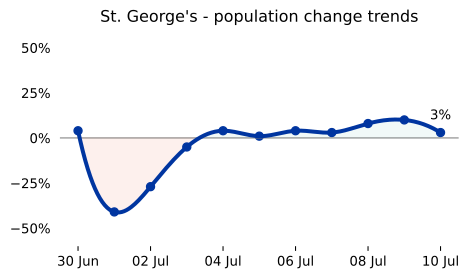
The population levels for St. George’s has returned to the pre-crisis baseline as of 4th July.
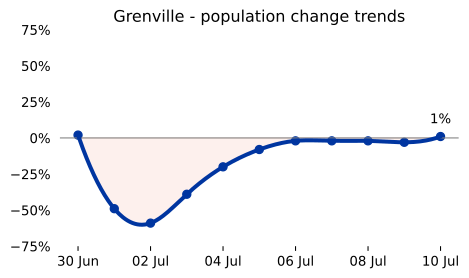
Grenville, has seen population returns continously since 3rd July and returned to pre-crisis levels as of 6th July. Areas north of Grenville to Sauteurs continue to see a large population decrease.
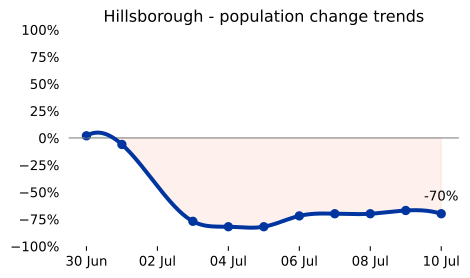
While widespread electrical and connectivity outages were evident in the days following the crisis, as connectivity returns, the data suggests decrease of approximately 70% for the past 5 days.
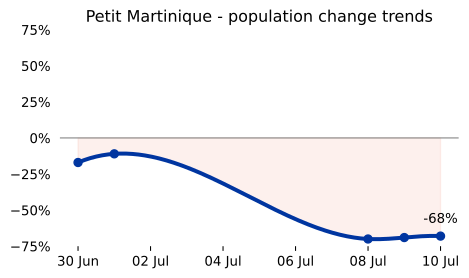
Widespread electrical and connectivity outages on the island, resulted in no data between the 2nd to 7th July, data from the past 3 days suggest a possible 68% population decline.
St. Vincent and the Grenadines
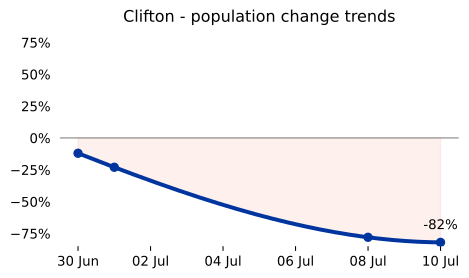
No data was available since 1st July for Union Island, due to widespread electrical and connectivity outages from 2nd to 7th July. Data from the past 2 days suggest a population decrease of 82%
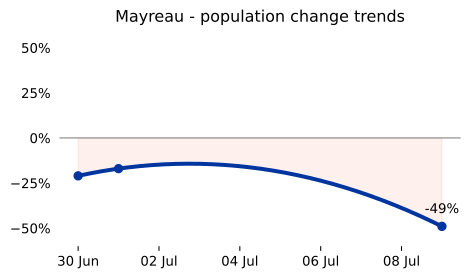
No data was available from 2nd to 8th July for Mayreau, due to widespread electrical and connectivity outages. Data from 9th July suggest a population decrease of approximitely 49%.
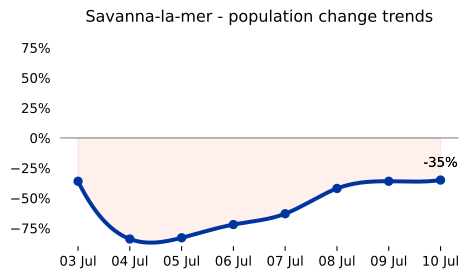
All areas of Savanna-la-mer continue to see poulation estimates far below the pre-crisis baseline.
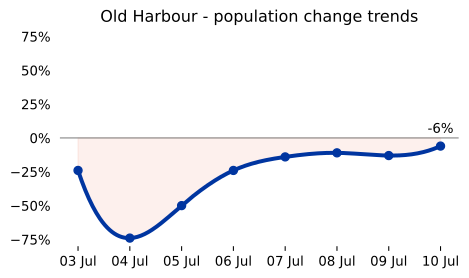
Urban areas of Old Harbour show population estimates returning to close to pre-crisis levels, while the outskirts of the town, especially to the west, are still seeing a signficant decrease.
Of the 2,825 building footprints on Carricou Island, Grenada, imagery of an estimated 888 are currently covered by clouds, preventing analysis. Of the remaining 1,937 footprints, 57% show some degree of visible damage:
913 buildings (47.13%) with damage fraction between 0% and 20%
70 buildings (3.61%) with damage fraction between 20% and 40%
75 buildings (3.87%) with damage fraction between 40% and 60%
102 buildings (5.27%) with damage fraction between 60% and 80%
77 buildings (40.11%) with damage fraction between 80% and 100%
This analysis is provided courtesy of Microsoft AI for Good Lab, using imagery from Planet SkySat from 2nd July 2024.
damage_pct_0m – the fraction of the building footprint’s area that is classified as damaged by the model
damage_pct_10m – total damaged area within a 10m buffer of the building footprint (including the footprint itself) / building footprint’s area (this can be >1.0 but we clip to 1.0)
damage_pct_20m – same as above but with a 20m buffer
damage – 1 if damage_pct_0m > 0 else 0
unknown_pct– covered by clouds
This analysis uses optical satellite imagery and likely underestimates building damage as not all building damage can be detected from this visual perspective. Cloud cover prevented analysis of 31% of the buildings.